

With so many parts to Medicare, it can be difficult to find the plan that’s best for you. Don’t worry, we’re here to help. Click the button below, select Medicare, and we’ll send you more information catered to your personal situation.
Over 56 million Americans are enrolled in the Original Medicare program. That’s most Americans ages 65 and older, regardless of their income or health status.
Original Medicare has only two parts. Part A is for hospital insurance and Part B is for medical insurance. You can use any doctor or hospital that takes Medicare, anywhere in the U.S. If you want drug coverage, you can join a separate Part D plan.

Medicare Part B is optional. It covers things like doctors visits, lab work and x-rays outside a hospital stay. It is an 80 – 20 plan meaning Medicare pays 80% of the approved expenses and you are responsible for the remaining 20%. For 2022, the premium for Part B starts at $170.10 per month (or higher depending on your income). For 2022 there is a deductible of $233 but the deductible is for the whole calendar year, not per occurrence. If you collect a Social Security check, your premium will most likely be deducted.


1. Medicare Prescription Drug Plan (Part D) – These plans (sometimes called “PDPs”) add drug coverage to Original Medicare, some Medicare Cost Plans, some Medicare Private Fee-for-Service (PFFS) Plans, and Medicare Medical Savings Account (MSA) Plans.
2. Medicare Advantage Plan (Part C) (like an HMO or PPO) or other Medicare health plan that offer Medicare prescription drug coverage. You get all of your Medicare Part A (Hospital Insurance) and Medicare Part B (Medical Insurance) coverage, and prescription drug coverage (Part D), through these plans. Medicare Advantage Plans with prescription drug coverage are sometimes called “MA-PDs.” You must have Part A and Part B to join a Medicare Advantage Plan.
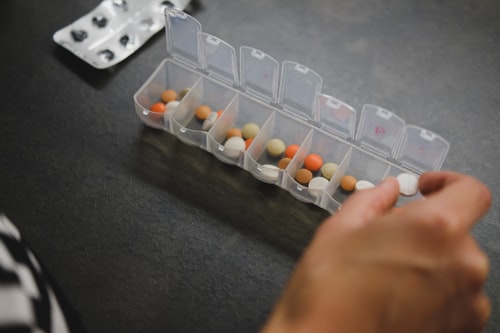

Each plan that offers prescription drug coverage through Medicare Part D must give at least a standard level of coverage set by Medicare. Plans can vary the list of prescription drugs they cover (called a formulary) and how they place drugs into different “tiers” on their formularies.
Some Part D plans have an upfront deductible. Once that has been met, the initial coverage phase begins. While in this phase, the member pays co-payments or co-insurances for the various tiers. Once the initial coverage limit has been met, the member falls into the donut hole and their Part D coverage ends. While in the donut hole, the member pays a predetermined percentage for generics and brand name drugs until the catastrophic coverage threshold is met. Once that is met, the member pays small co-payments or co-insurances for generic and brand name drugs for the remainder of the calendar year. Individuals identified as “dual eligible” (Medicare/Medicaid beneficiaries) by CMS are not subject to the donut hole, as their prescription coverage is fully subsidized. The donut hole will be phased out by the year 2020.

A Medicare Supplement Insurance (Medigap) policy helps pay some of the health care costs that Original Medicare doesn’t cover like:
Medigap policies are sold by private companies. Some Medigap policies also cover services that Original Medicare doesn’t cover, like medical care when you travel outside the U.S. If you have Original Medicare and you buy a Medigap policy, here’s what happens:
This is not a complete listing of plans available in your service area. For a complete listing please contact 1-800-MEDICARE (TTY users should call 1-877-486-2048), 24 hours a day/7 days a week or consult www.medicare.gov.

